Equities were rallying through this period, unsurprisingly. So, were digital bit apes and other assorted things.
However, there appears to be evidence that credit conditions are now heading the other way:
“The Federal Reserve has reduced its balance sheet by $626 billion since the peak in April 2022, with total assets now down to $8.34 trillion, the lowest since August 2021, according to the weekly balance sheet released today. Compared to a month ago, total assets dropped by $94 billion.” “Over the past four weeks, the Fed has shed $61.2 billion in Treasury securities, exceeding by a smidgen the monthly cap of $60 billion.” – Fed’s Balance Sheet Drops by $626 Billion from Peak
“As it stands, the average lender is now back up into the low 7’s for a well-qualified 30yr fixed scenario. These aren’t the highest levels we’ve seen during this cycle, but they are the highest in more than 4 months (and not too far away from the long-term highs just under 7.4%).” – Calculated Risk: “Mortgage Rates Now Back Above 7%”
We have had a 15 year bull market with low interest rates and lots of liquidity. In other words, “Disneyland.”
My sense is most market participants are going to be slow to change how they learned to behave during the bull market cycle, until they are forced to do so.
“Standards apply not just to the quality of work you produce but the opportunities you work on. If you accept substandard work from yourself, you’ll only get average work from others. If you say yes to average projects, you’ll have no time for exceptional ones.” – Brain Food, Farnam Street
Big news in my world: I resigned my CFO role at a private equity backed software maker after selling the business to a new private equity group. I will be taking some time off to “to evaluate, to collect, to dream, to wonder and to wander.”
Reading and writing more is definitely a goal.
Here are my most influential reads for the month – in no particular order:
Jim Chanos: The Golden Age of Fraud in Finance – ” One of the things that is as old as financial markets is that we don’t see oversight or new laws and regulations until after people lose money.”
“Disinflation” Hoopla Sunk by Spiking Prices – “Not only did all the relevant measures get a lot worse in January, but the prior three months, October through December, were revised higher – much like the CPI inflation readings a couple of weeks ago – showing substantially greater inflation momentum at the end of the year than originally shown.”
The Wisdom of Non-Effort – “Non-effort is letting yourself take a walk and notice what comes up for you as something to write about, and trusting that”
Just Twenty-Five Pages a Day – “The solution I devised for myself is a simple one: 25 pages a day. That’s it. Just commit to that, and then do it.”
Buffett Profile from 1979: “The investor’s investor” – “The essence of Warren Buffett’s thinking is that the business world is divided into a tiny number of wonderful businesses well worth investing in at a price and a huge number of bad or mediocre businesses that are not attractive as long-term investments.”
We Are All Bond Traders Now – “What this means is that if interest rates are low, you care a great deal about the interest rate. Any change to your numerator is easily wiped out by a small change in the interest rate you are discounting at.”
The Forgotten Lessons of 2008: Seth Klarman – “You must buy on the way down. There is far more volume on the way down than on the way back up, and far less competition among buyers. It is almost always better to be too early than too late, but you must be prepared for price markdowns on what you buy.”
Enough Part 2 – A Framework – Calibrating Capital – “Too many of us run too hard for too long, reaching a point of exhaustion (or worse) when we could have taken a breather (or several of them) long ago.”
Microsoft and the Metaverse – “I suspect that this is the path that virtual reality will take. Like PCs, the first major use case will be knowledge workers using devices bought for them by their employer, eager to increase collaboration in a remote work world, and as quality increases, offer a superior working environment.”
Note: This is based on when I read the article, not necessarily when it was first published. Unfortunately, my backlog of things I would like to read always seems to dwarf the amount of time I can devote to reading.
“If you stick to a path that is no longer worth pursuing, whether it’s a relationship that isn’t going well, or a stock that you’re invested in that’s losing money, or an employee that you’ve hired who isn’t performing, that is when you lose ground.” – Brain Food, Farnam Street
I have some thoughts here, but have not had the time to put them into writing. So I am not sure if they are good thoughts or not.
I continue to feel the risks here are massive and still mostly hidden, and there is a good chance of getting squished. Which I would prefer not to have happen. Squishing mechanisms include but are not limited to U.S. treasury market illiquidity, imbalances created by the currency market / massive USD strength, and real estate market trend changes.
Midterm elections will be interesting. But I cannot watch. There seems to be a faction of people that are “bat shit” crazy. And there is not a rational middle ground between “bat shit” crazy and not “bat shit crazy”. So, we should just stop trying. But tolerating “bat shit” crazy is not a good option.
And, I think you have witnessed peak Zuckerberg and Musk, but for slightly different reasons. Do you want to be bold and call peak Private Equity while we are at it?
Continuing to notch some “easy” reads:
And that got me to my objective:
Here are my most influential reads for the month – in no particular order:
Rare Skills – “People don’t like leaving opportunities on the table, and it’s counterintuitive to realize that you’ll likely end up with more than those whose appetite for more is insatiable.”
Brief amicus curiae of The Onion filed – “Rising from its humble beginnings as a print newspaper in 1756, The Onion now enjoys a daily readership of 4.3 trillion and has grown into the single most powerful and influential organization in human history.” SMS: Not a follower of the Onion, but this is some inspirational writing.
Harvard predicts looming markdowns to private assets – ” Private funds, however, have not been adjusted to reflect new market conditions, and many have gained in value through to the end of mid-year — a disconnect Harvard predicts will hit portfolios later.”
What to Buy? Bonds. When? Now. – “Looking at the latter half of the 1970s, however, rates increased from 5% to 10%, yet bonds kept making money.”
Summary of My Post-CPI Tweets – “It’s a mistake, the same one people are making in rents & home prices. Rates of change could mean-revert. Prices will not. Prices are permanently higher, b/c the amount of money in the system is permanently higher. This chart shows the price level. Not going back to the old days.”
E-Bikes Need Their Own Classification System on Public Land – “Rapidly increasing E-mountain bike (eMTB) use on non-motorized trails is increasing these conflicts and impacts.” SMS: Explain to me how a eMTB is not a motorized vehicle? Is a Tesla not motorized?
You weren’t supposed to see that – “In total, the Federal government created $4.3 trillion in direct economic stimulus of which $3.95 trillion was dropped onto the economy, as if by helicopter, in a period of under 18 months.”
The bond market massacre of September 2022 – “The fear is that as central banks end the long period in which they systematically supported bond markets, deep cracks will be exposed. “
Note: This is based on when I read the article, not necessarily when it was first published. Unfortunately, my backlog of things I would like to read always seems to dwarf the amount of time I can devote to reading.
“When you are a Bear of Very Little Brain, and you Think of Things, you find sometimes that a Thing which seemed very Thingish inside you is quite different when it gets out into the open and has other people looking at it.” ― The House at Pooh Corner by A.A Milne”
Writers that can consistently and frequently write new and interesting pieces always impress me. I am pretty thrilled if I have what I consider to be one new and unique thought a month. Then have the luck to capture that fleeting moment down in writing. And, that generally turns into the Winnie the Pooh moment described above.
That previous paragraph may be an awkward way of explaining why I have been fairly quiet these days, on top of just being busy at work.
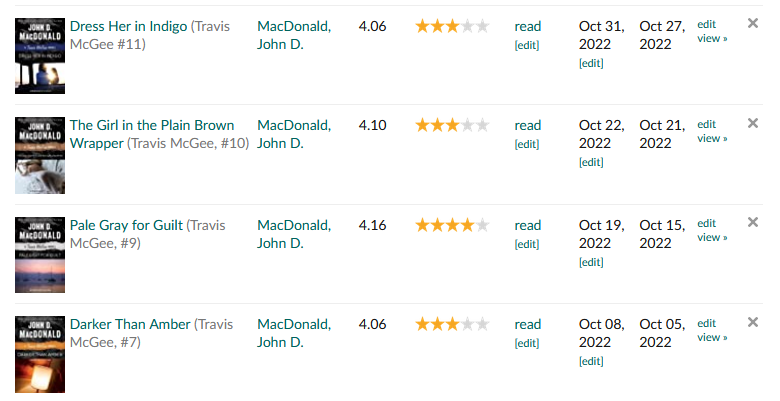
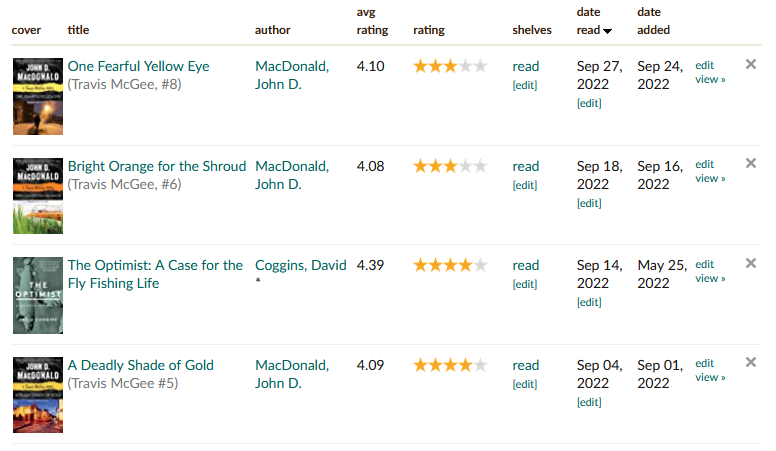
For similar reasons, reading was a bit off this month – although I did notch some easy reads.
Correct, I am a touch out of order on the Travis Mcgee series, but that does not seem to matter too much.
Here are my most influential reads for the month – in no particular order:
You’re not good at this. – “Zero percent interest rates plus fiscal and monetary stimulus with housing up 40% and stocks at an all-time high was a ridiculous policy.”
Entering the Superbubble’s Final Act – “The current superbubble features the most dangerous mix of these factors in modern times: all three major asset classes – housing, stocks, and bonds – were critically historically overvalued at the end of last year.”
A Housing Bubble and Kim Kardashian: More Troubling News for Markets – “Pumped up by Federal Reserve expansionary policies, the public’s wealth in equities and residential real estate has ballooned, relative to the economy, even faster and more furiously than during the housing bubble of the 2000s and the dot-com daffiness of the 1990s.”
Seeing Red – “Is China our enemy or competitor? The answer is yes.”
Would You Still Buy A Tesla? – “I used to be a fan of Elon Musk, no longer. The guy is irrational, and he believes the rules don’t apply to him. And he acts like he’s the only one who owns the truth, who can move us into the future, and that’s just hogwash.”
Pillow fight – “That’s like going to a Dallas Cowboys football game at AT&T Stadium, seeing 80,000 fans dressed in silver and blue with stars painted on their faces, all cheering wildly when the Cowboys score. Then, based on that experience, determining everyone across the nation is a rabid Cowboys fan and the 82,500 people at MetLife Stadium cheering for the Giants simply just can’t be real.”
Note: This is based on when I read the article, not necessarily when it was first published. Unfortunately, my backlog of things I would like to read always seems to dwarf the amount of time I can devote to reading.
“Predicting the future is harder than misremembering the past.” – Cliff Asness
I have been pretty quiet this summer, since I have no special insights into what the future holds. There are things that I think are likely to happen. Or should happen, but probably won’t. But the error bars seem pretty wide at this point.
I keep coming back to the fact that there have been massive flows driving asset prices over the last few years. And that seems to still be the case. The Fed is on track to ramp up their balance sheet reduction in September and that will most certainly be interesting to watch unfold.
Here are my most influential reads for the month – in no particular order:
The Bid/Ask Spread in Venture Capital – “When the bid/ask spread exceeds 5 or 10%, the market seizes up, like a combustion engine without oil. No one trades. Investors pack their vests into a rolly-suitcase and head to the beach.”
Trout savant in a big black cape – “Even with that cape, Sheridan Anderson was always a stealth man.” SMS: Mrs. SFTE is attempting to turn me into a fisherman.
June CPI report: bad, bad, bad, bad, bad – ” As I have been saying for 9 months, house prices (black) lead OER by 12-18 months, meaning we were likely to see the highest YoY% increases in OER ever. “
Tech and War – “If a country, corporation, or individual assumes that the tech platforms of another country are acting in concert with their enemy, they are highly motivated to pursue alternatives to those tech platforms even if those platforms work better, are more popular, are cheaper, etc.”
JPMorgan’s Aronov Ignores the ‘Cash Is Trash’ Chorus – “But the reality is that if you have been in cash for the last five years, you’ve essentially outperformed the Bloomberg Aggregate index year-to-date, over one year, three years, and, depending on the day, yes, even five years. “
3.5% ASAP – “Be patient. 12 month Treasuries at 2.7% are better than your money market fund and almost all other alternatives.” SMS: The spread between MM funds and Tbills seems nonsensical to me.
Brain Food: Good Advice – “You have to learn to quit being right all the time, and quit being smart all the time, and quit thinking this is a contest about how smart you are and how right you are, and realize that you are here to make a positive difference in the world.”
Elon’s Out – “Musk seems to get a lot of joy out of using Twitter, and pretending to buy Twitter is a good way to create drama on Twitter.”
Note: This is based on when I read the article, not necessarily when it was first published. Unfortunately, my backlog of things I would like to read always seems to dwarf the amount of time I can devote to reading.
“The best way for investors to learn from mistakes is to let others make them, then read about it.” – Scott Barlow in The Globe and Mail
A belated Happy Fourth of July…
Here are my most influential reads for the month – in no particular order:
Bill Miller: An Investor’s Evolution (Part I) – “He found that the “source of excess return had little to do with pure accounting factors such as low p/e or low price-to-cash flow; it had to do with changes in the return on capital.””
Time to Stop Believing Deficit Bullshit – “There is a rational middle between Zero deficits on one side and Modern Monetary Theorists on the other. We can fix our infrastructure, extend broadband to everyone throughout the country, even work to moderate climate change — and the economy will be just fine.”
The Cantillon Effect: How the Rich Get Richer – “In other words, the “flow path” of the new money through a system matters.” SMS here: The flow path of money leaving the system probably matters too.
House Money – “There has been an unfathomable amount of money made in crypto over the last decade. But it’s not the amount of money made that is most shocking. It is the velocity at which it occurred, and the age group that benefited most.”
Selling to yourself: the private equity groups that buy companies they own – “At the heart of the deals is a broader issue that is becoming more significant as stock markets tumble. Companies owned by private equity groups are facing the same pressures as their listed peers, as interest rates rise, supply chains struggle and an economic downturn looms. Critics of the industry believe some of these deals could be a way of hiding from this reality.”
One Experiment Ends and Another Begins – “So this is in no way unforeseen. The prediction in advance was that this behavior would provoke very high inflation. And the MMTers said “pshaw.” They were wrong, and that experiment is over. The next person who mentions MMT, you are entitled to run out of town on a rail.”
Right answer to wrong question – “For the first time in the history of Park City skiing, the planning commission has said “no” to resort upgrades. A ski town saying “no” to more skiing is a turning point. “
The Challenging Middle – “Be wary. This present cycle is so unusual – pandemic lockdown, fiscal stimulus, overdue wage increases, inflation spike, supply chain issues, ongoing global pandemic, and a Fed overreaction (even panic) – that prior cycles do not fit very neatly. “
Fed Starts Experiment of Letting $8.9 Trillion Portfolio Shrink – “After doubling in size through asset purchases in the first two years of the pandemic, the balance sheet will be reduced at a pace that’s almost twice as fast as after the last financial crisis. While the process officially commences on Wednesday, the first US Treasury securities won’t run off until $15 billion mature on June 15.”
Note: This is based on when I read the article, not necessarily when it was first published. Unfortunately, my backlog of things I would like to read always seems to dwarf the amount of time I can devote to reading.
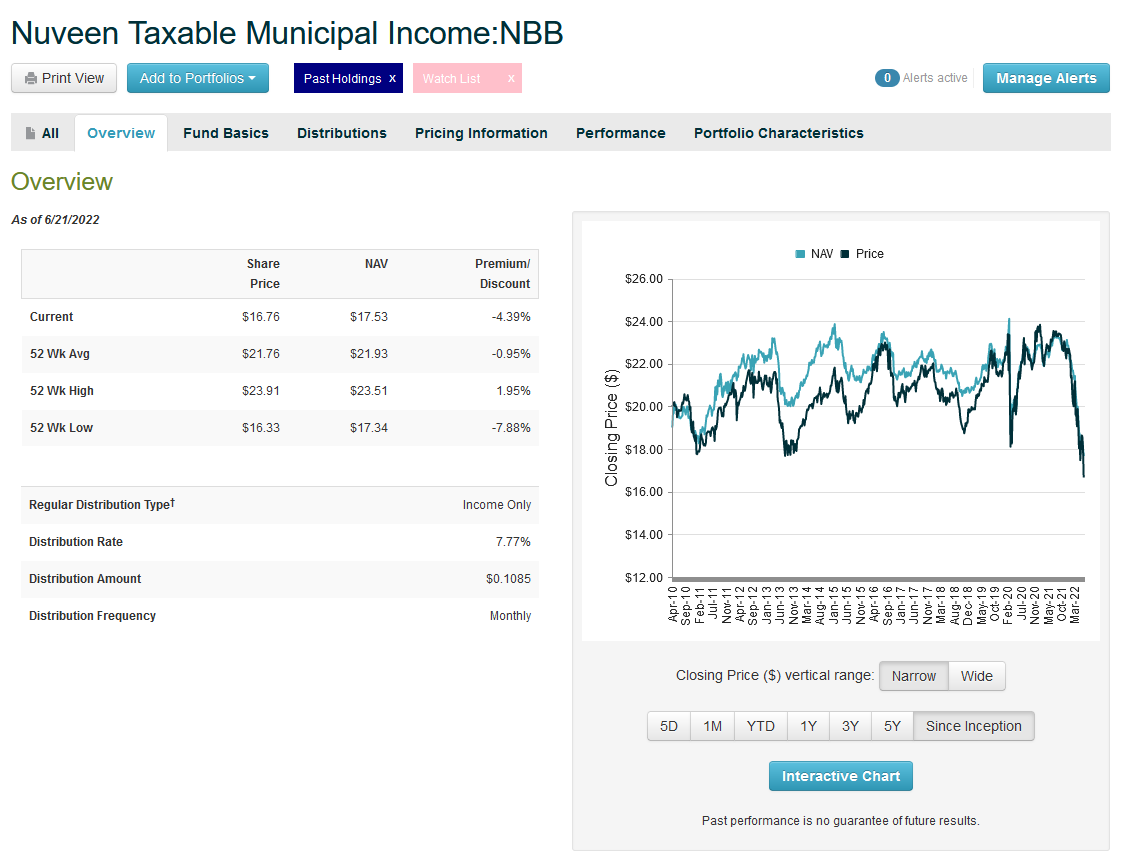
I see a chart like this, and the value hunter in me, cannot help but see an opportunity. This fund is plumbing its all time lows.
But then I look at a chart like this, and think, well maybe all time lows when the history is only from 2010 forward, is irrelevant (maybe even dangerous) given the macro squishing that could happen if large flows / rate trends reverse (i.e. return to more normal levels).
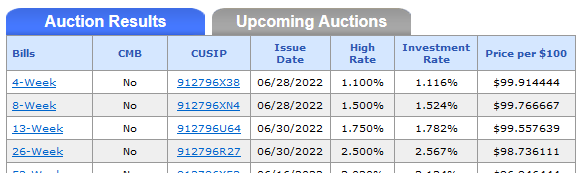
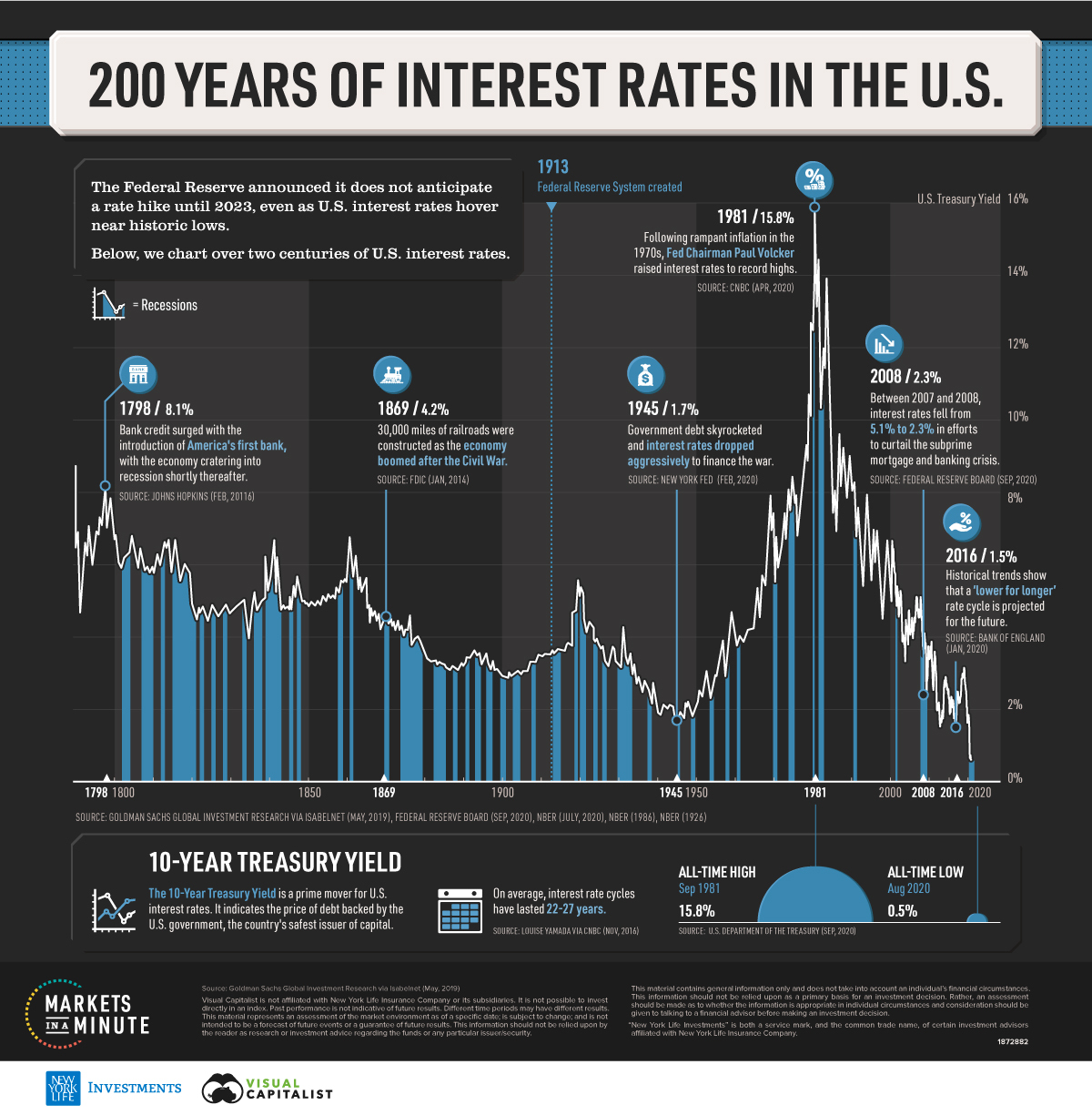
The vast majority of interest rate history is above, not below, where we are today.